Dealing With Difficulty - Grade 9
Dealing With Difficulty is a two part unit that was designed as part of Inquiry By Design’s efforts to ensure that secondary students have regular and supported opportunities to work with difficult texts. Each study at each grade level is an excursion into difficulty that is important in and of itself, but that is also valuable because it supplies a basis for reflection and comparison in subsequent experiences with difficult texts.

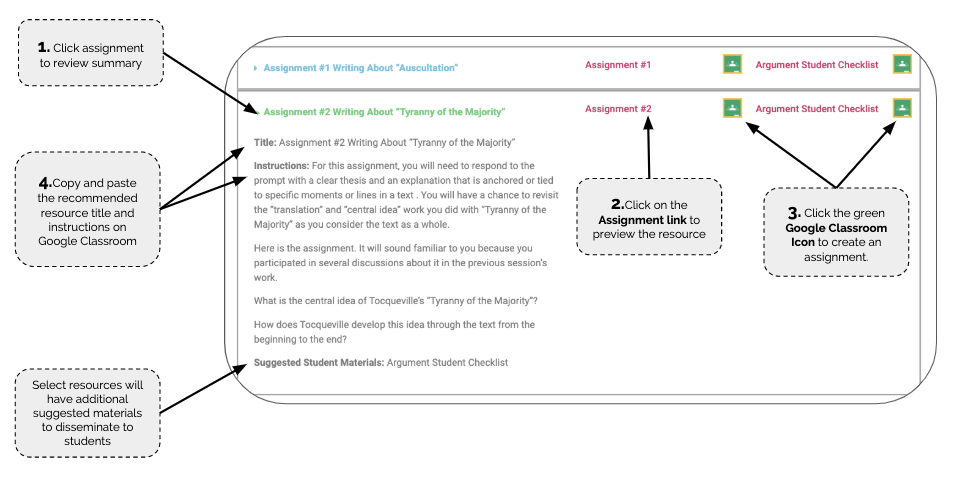
Table of Contents
Writing Tasks
Title: “Auscultation”: First Read
Teacher Manual Instructions:
Session 1
- Ask students to make a short entry in their literacy notebooks called “’ Auscultation’: First Read.” Give students 3-4 minutes to write a quick reflection on the following prompt. You may ask a student or two to share their thoughts afterward, if you wish, but be mindful of how students’ views can shape the class’s attitude:
- What is your first reaction to “Auscultation” and the difficulty of the text? How challenging does it seem? Why?
Title: Small-Groups: Difficulty in “Auscultation” What and Why?
Teacher Manual Instructions:
Session 1
- Ask students to work independently for a moment to review their difficulty markings in “Auscultation” and to identify three moments or lines they marked. Give students 4-5 minutes to make an entry for each line or moment on the chart they created in their notebook. Remind students to be sure to copy down the line number and an excerpt of the moment as it is written in the essay in the “What is difficult?” column. If the selection is especially long, students can copy the line numbers and a small portion of the quote for reference. If students have marked numerous moments, challenge them to choose the ones they think are most important or most confusing.
Next, place students in pairs or trios and ask them to share their chart entries with their partner(s). Give each group a piece of chart paper and a marker and ask students to work together to create a master “What’s difficult?/ Why is it difficult?” chart for their group. Explain that at the end of the small-group work, each group will post its chart on the wall so the rest of the class can review it and all of the other charts prior to the upcoming whole-group discussion. Give groups 7-10 minutes to build their charts.
Title: Small-Groups: ““Auscultation” Sections and Chunks
Teacher Manual Instructions:
Session 2
- Place students in pairs or trios and then disseminate the assignment.
Lead the whole group through this task for the first section or chunk.
Afterwards, answer any questions students have about that work and then give the small groups the remainder of the work period to complete both lists for each of the remaining chunks or sections.
Title: Small-Groups: Retelling “Auscultation” Search and Study
Teacher Manual Instructions:
Session 3
Place students in pairs or trios.
Negotiate expectations and rules regarding issues such as accessing dictionaries, using the Internet (on either computers or phones), or consulting other resources that students might require during their search and study work.
Give students time to meet in their small groups to complete the search and study work for the remaining sections of the essay. Groups may need time beyond this class meeting to complete this task.
Title: Small-Groups: Retelling ‘Auscultation’: Making Sense of Difficult Moments
Teacher Manual Instructions:
Session 4
- Ask each student to select one of the difficult moments identified during Session 2 (or an additional idea they feel is important) that they want to work on.
- Place students in pairs and explain that each pair will work on two lines or moments in the following way:
- Work together to say how you make sense of this line or moment.
- Describe how you made sense of it.
- Capture your work for each moment or line on your “Making Sense”
notebook chart.
Explain to students that they should take 5-7 minutes to work on each of their lines.
Title: Linking the Chambers
Teacher Manual Instructions:
Session 5
- Take a few minutes to review the “Linking the Chambers” assignment with the class and to answer any questions students may have.
- Place students in groups of twos or threes.
- Students should collaborate with their group to complete the “Linking the Chambers” assignment.
Title: Assignment #1 Writing About “Halloween Party”
Instructions: For this assignment you will write an argument about “Auscultation” that answers the question in the box below. It will sound familiar to you because you participated in a discussion about it in the previous session’s work:
What is Church’s primary message in “Auscultation”?
Suggested Student Materials: Argument Checklist
Title: Writing About “Tyranny of the Majority”
Instructions:
For this assignment, you will need to respond to the prompt with a clear thesis and an explanation that is anchored or tied to specific moments or lines in a text. You will have a chance to revisit the “translation” and “central idea” work you did with “Tyranny of the Majority” as you consider the text as a whole.
Here is the assignment. It will sound familiar to you because you participated in several discussions about it in the previous session’s work.
What is the central idea of Tocqueville’s “Tyranny of the Majority”?
How does Tocqueville develop this idea through the text from the beginning to the end?
Suggested Student Materials: Informational/Explanatory Checklist
Charts for Discussion
Title: Difficulty in “Auscultation” What and Why?
Teacher Manual Instructions:
Session 1
Next, sketch out a two-column chart like the one below and ask students to create one like it in their notebooks.
Model making an entry in the “Difficulty” chart. Point out that there may be many kinds of difficulties that showed up for students: difficult words, difficult or confusing sentences, difficult ideas, unusual links made by the author, etc. Focus your modeling on showing how a “difficult moment” is one where you may have felt confused or may have stopped understanding the ideas. Point out that answering the question “Why is this difficult?” is actually something you need to stop and think about—be as specific as possible as you explain why it’s difficult. This will later help us think through the difficulty.
CLOSING MEETING
- Distribute masking tape and have the groups post their charts on
the classroom walls so that the class can conduct a “gallery walk” where students take a few minutes to walk around the room and read the work on each chart. - Give students 3-5 minutes to walk around and read the other charts in the room.
- Convene a whole-class discussion about the work. You are not trying to resolve these questions right now because there is time set aside for that work in the next sessions. You might initiate the conversation by saying something like this:
- “Let’s take a look at what you guys think is difficult in the essay and what it is about those moments or lines that you think make it difficult.”
- During this conversation, be sure to capture the class’s thinking on a new chart titled “Difficulty in ‘Auscultation’: What and Why?” that can be displayed for the whole class to see. (You will need to display this chart in the next session.) This conversation is a chance for the class to notice overlaps across groups and to benefit from the thinking each group did.
Title: Making Sense of “Auscultation”
Teacher Manual Instructions:
Session 4
Reread the difficult moment and invite one or two volunteers to offer ideas about this. Encourage other students to extend, push back, or otherwise respond to these ideas. After discussing this with the class for 4-5 minutes, work with the group to craft entries for the second and third columns. (Students should add these model entries to their notebook charts as well.)
Title: Difficulty in “Tyranny of the Majority” What and Why?
Teacher Manual Instructions:
Session 8
- Remind students that they completed this same type of chart with Church’s essay, and review any instructions or improvements you would like to see students make in the way they approach this task the second time. (For example, you might wish to see more specific descriptions of why something was difficult.)
- Give students 2-3 minutes to review the text and the moments they marked as difficult. Encourage them to add any additional markings to the text during this review.
- Next, reconvene the class and ask students to share the moments they identified as difficult. Work with the class to enter line numbers and excerpts in the chart’s first column and to answer the “why is it difficult” question in column two. As before, when working on the second column, push students to explain what, specifically, makes the moment confusing or difficult. Sometimes, that explanation will simply be “I don’t know this word,” but other times they will need to clarify further: “This sentence is so long and full of commas that I can’t untangle what he’s talking about,” for example.
Title: Paragraph 1: A Translation
Teacher Manual Instructions:
Session 8
- Reconvene the whole group and work with the class to craft a translation of Section 1. Capture this translation on a chart or other display and title it something like “Paragraph 1: A Translation.”
- As you work with the class on this translation, suggest to students that the commas and semicolons divide the sequence of words into manageable parts and that it is a reader’s job to figure out how each part relates to the ones before or after it. This can be seen in the first sentence, where the semicolon divides the thought into two opposing halves.
Checks for Understanding
Title: “Auscultation” Lists: Important Moments and Questions
Teacher Manual Instructions:
Session 2
- Reconvene the class and facilitate a discussion about the work period’s list-building work.
- Organize this discussion by working with the class to create, on a chart, a “master” version of the lists for each chunk on a chart. You may add newly discovered difficulties to the “What and Why?” chart from the previous session, while capturing important moments on a separate list. You will continue to work with the difficult moments in the following sessions. In addition, periodically, over the next few sessions, you may wish to ask students whether they think they should add any additional items to the “important moments” list. (They will refer back to this list in Session 6.)
- Next, work with the class to sort the difficult moments listed on the chart as described below. This sorting work will shape the work of the next two sessions, so if anything prevents you from completing it at this time, be sure to return to it before beginning the next session’s work. The goal is to guide students into sorting the difficulties they have identified into two categories:
- “Search and study” difficulties: This category encompasses the types of questions that could be answered or informed by outside resources, like a dictionary or web search –terms, concepts, topics, or places that students want or need to learn more about.
- Other moments in the text that are difficult: These are the types of questions that cannot be answered by outside research and would be better answered through discussion, rereading, and other approaches. Questions of this type would include difficulties around why the author makes certain writing choices, or how the author organizes information, or what the author means then using language in an interesting or creative way.
- Wrap up the closing meeting by working with the class to create basic research questions for each of the “search and study” items. List these questions on the board or on a chart. Ask students to copy them down in their notebooks as well. Students are encouraged to add and include additional questions of their own to their lists, but in any case, you will need the list of basic research questions as well as the list of the “search and study difficulties” and “other moments” in the next two sessions.
Title: “Auscultation” Questions and Answers
Teacher Manual Instructions:
Session 3
- Reconvene the class and lead the whole group through brief discussions of each of the research questions generated at the end of Session 2.
- Check for understanding: Students should share their findings and work together to develop an answer to each question. Capture these answers on the board or another display so that students see them in writing, and be sure to return frequently to the question of how the information helps inform the class’s understanding of the text. Strongly encourage students to add new information to the notes they made during the work period.
Title: Retelling of “Auscultation”
Teacher Manual Instructions:
Session 4
- Facilitate a whole-group meeting in which the class collaborates to create a re- telling of “Auscultation.” To do this, move through the essay chamber by chamber. If you use chart paper to capture the retelling, be sure to leave it posted in the room so students can review it during the sessions ahead. If you type it up on a computer, be sure to make it easily accessible to students or distribute copies to the class so students can glue or tape it into their notebooks.
- As they collaborate on the retelling, students should draw on the information and insights they garnered from the search and study and making sense work.
- After completing the retelling work for the last chunk, go back and read the entire summary to the class and make any final adjustments or additions.
Title: Small-Group Work: “Auscultation” Reflection Questions
Teacher Manual Instructions:
Session 7
- Place students in groups of twos or threes and ask them to chart a response to the following questions:
- What did you learn about this essay from the work in the last few sessions
- What did you learn about dealing with difficult texts from this study of “Auscultation”?
- What were some of the specific things we did to make sense of the essay that we could use with other texts, too?
- Give students masking tape and ask them to post the charts on the class- room walls. Give students 3-5 minutes to walk around and read the other charts in the room.
Title: Translation Strategies
Teacher Manual Instructions:
Session 8
Use the following question to debrief the work period experience: “What are the things you did to create a translation, and what was the order, as best you can remember, in which you did them?”
Check for understanding: Capture student observations on a chart titled “Translation Strategies.” The class will add to this chart over the following sessions.
Title: Paragraph 2: A Translation
Teacher Manual Instructions:
Session 9
Check for understanding: Afterwards, reconvene the whole group and work with the class to craft a translation of the second paragraph. Capture this translation on a chart for display and title it something like “Paragraph 2: A Translation.” Consider asking students to copy the class translation down as a model.
Title: Paragraph 3: A Translation
Teacher Manual Instructions:
Session 9
- Reconvene the whole group.
- In “whip around” fashion, have representatives from each small group share their translation with the class. Capture a distillation of the class’s translation ideas on a new chart titled “Paragraph 3: A Translation.” Students should compare this to their own translation and make revisions if the class translation differs meaningfully in content from their group work.
- Afterwards, revisit the following question to debrief the work period experience: “What are the things you did to create a translation, and what was the order, as best you can remember, in which you did them?” Add any new items to the “Translation Strategies” chart.
Note: This question will be repeated one more time during this unit. It is also a good opportunity to ask students, specifically, how they solved the difficulties they marked.
Title: Paragraphs 4-7: A Translation
Teacher Manual Instructions:
Session 10
Conduct a “gallery walk” for the translation charts where you give students 3-5 minutes to walk around and read the other translation charts in the room.
Have students return to their seats and convene a whole-class discussion about the work. During this conversation, be sure to capture the class’s thinking on a new chart titled “Paragraphs 4-7: A Translation” that can be displayed for the whole class to see. This conversation is a chance for the class to notice overlaps across groups and to benefit from the thinking each group did.
Afterwards, revisit the following question to debrief the experience: “What are the things you did to create a translation, and what was the order, as best you can remember, in which you did them?”
Add any new items to the “Translation Strategies” chart and ask students, specifically, how they solved the difficulties they marked.
Title: Paragraphs 8-11: A Translation
Teacher Manual Instructions:
Session 11
Reconvene the class and work with students to craft a whole-class translation of paragraphs 8-11. To do this, call on students to share the sentences they wrote with their partners during the work period. Draw on the students’ work to negotiate a class translation and capture it on a chart titled “Paragraphs 8-11: A Translation.”
Title: What is the central idea of Tocqueville’s “Tyranny of the Majority”?
Teacher Manual Instructions:
Session 12
- Convene a whole-class discussion about the central idea in Tocqueville’s text as well as how he develops his idea across the paragraphs. Once again, be sure to use the translation charts as scaffolds or points of focus for the discussion.
- Encourage students to take notes during this discussion. These notes will play an important role in the formal interpretive writing task introduced in the upcoming session.
- Resist the urge to explain or identify the connections yourself. Instead, push the conversation along by doing the following:
- Ask follow-up questions, including
- Requests for clarification.
- Requests for additional support for students’ ideas.
- Requests for further development of their ideas.
- Requests for explanations of how individual student’s ideas build on or relate to what students have said previously.
- Requests for students to summarize the ideas that are on the table.
- Draw students back to the text. Asking “What line?” questions and otherwise referring back to the text are critical if students are to grow accustomed to doing text-based work. Remember that apprenticing students into the world of text-based work is as important as negotiating responses to the prompt in play.
- Be patient, but also be persistent in your quest for responses.
- Ask students to talk to one another rather than to or through you. Support students to extend, confirm, or critique each other’s ideas.
- Ask follow-up questions, including
- Work to ensure that everyone has an opportunity to participate. Establish the expectation that everyone’s idea counts and that people get smarter by working together to explore difficult questions or ideas.
- Check for understanding: In addition to facilitating this conversation, work hard to capture and distill the major ideas that students are developing on a class chart. Push students to help you build text-based explanations to support them. This will ensure that students get a glimpse of what it looks like when someone builds a text-based explanation.
Independent Reading
Title: Reading Log
Teacher Manual Instructions:
Independent Reading
As you transition to independent reading, discuss how students can keep a reading log. Show students how you would like them to set up and use their reading log to record their independent reading this year. An example of one way a reading log could be set up is provided nearby. You may choose to have students create a table in their notebooks, use a pre-made sheet, or a digital format.
Explain to students that they should make an entry in their log only after they have finished a book. You will need to negotiate with students how to handle the entry of magazine readings (for example, entire issues versus individual articles).
After students have set up the log, including proper headings, creating the grid, etc., show students how to make an entry.
Answer any questions students have about the reading log.
Begin independent reading.
Consider conducting individual reading conferences with students as they are engaged in independent reading. In No More Independent Reading Without Support, Debbie Miller and Barbara Moss (2013) suggest that during early conferences, you should listen to students and work to build trust: Ask students how they view reading and how they think of themselves as readers; ask what they are interested in. Over time you can ask more about what they are reading and about how you can help them or what they are struggling with. Use what you learn from these conversations to guide additional instruction with groups or with the class.
Title: Independent Reading – Individual Planning Sheet
Instructions:
Title: End of Marking Period Self-Assessment
Instructions:
Unit Resources
Title: Retelling “Auscultation” Part 1: Search and Study
Title: Retelling “Auscultation” Part 2: Making Sense of Difficult Moments
Title: Grades 9 and 10 – Interpretive_Argument Rubric
Title: Grades 9 and 10 – Informational_Explanatory Rubric
Title: Scaffolds and Modifications: Descriptions and Use